
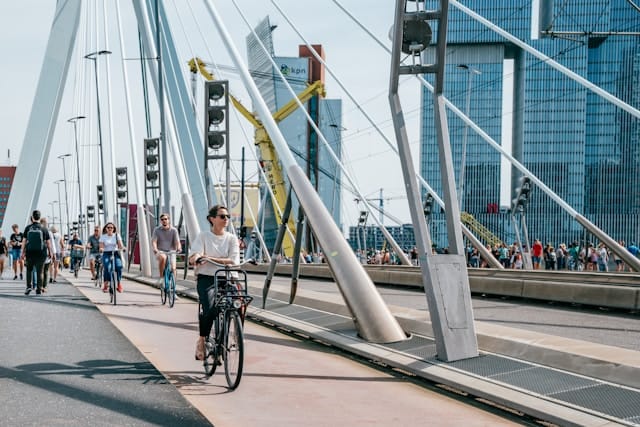
Global cities currently witness a major shift in how people move around urban centers. Planners now realize that sustainable transportation relies on human psychology rather than just new technology. Therefore, understanding these behavioral drivers is essential for reducing carbon footprints effectively.
Many people assume that green energy requires complex infrastructure changes or expensive vehicles. However, real progress often stems from simple adjustments in daily decision-making processes. Consequently, we must examine why individuals choose specific travel methods over others.
The Power of Convenience and Accessibility
Human beings naturally gravitate toward the path of least resistance in every situation. If a subway ride takes less time than driving, ridership numbers increase immediately. Conversely, complex bus schedules deter potential riders who value their time highly.
Apps and digital payment systems significantly lower the barrier to entry for users. Commuters can now pay for rides with a single tap on their smartphones. As a result, public transit becomes a seamless part of their daily routine.
Accessibility dictates choice far more than environmental ideology or personal moral values. A station near a home encourages walking, while a distant stop forces driving. Therefore, urban designers must prioritize proximity to encourage these positive shifts.
Micro-mobility options such as electric scooters solve the “last mile” problem effectively. Users can locate a scooter instantly and ride it to their final destination. This ease of access makes leaving the car at home a viable option.
Mixed-use developments further reduce the need for long daily commutes in cities. When people live near their workplace, they walk or bike more frequently. Consequently, smart city planning creates an environment where driving becomes unnecessary.
Why DIY Moving Isn’t The Way to Go
Many individuals believe that renting a truck saves money during a household move. However, this approach often leads to hidden costs and significant environmental waste. Inefficient packing results in wasted cargo space and requires multiple trips back and forth.
Professional movers utilize their fleet to maximize fuel efficiency and reduce total mileage. They consolidate loads to ensure that every cubic foot of space serves a purpose. Therefore, a single large truck emits less carbon than several trips in smaller vehicles.
You’re Not Achieving Much On Your Own
Do-it-yourself moves frequently involve older, rented trucks with poor fuel economy ratings. These vehicles consume vast amounts of gas and release heavy pollutants into the air. In contrast, sustainable transportation principles favor modern fleets with stricter emission controls.
Additionally, the physical stress of moving boxes often leads to personal injury. Professional teams possess the equipment to handle heavy items safely and quickly. Consequently, sometimes it’s better to find help for both your physical health and the environment — and that’s why DIY moving isn’t always the smart choice.
We must also consider the waste generated by single-use packing materials. Professionals often use reusable crates or blankets to protect furniture items. Thus, hiring a service reduces the amount of plastic and cardboard in landfills.
Financial Incentives Over Environmental Guilt
Money remains the most powerful motivator for changing entrenched human behaviors and habits. High gas prices force drivers to look for cheaper alternatives immediately. Consequently, economic pressure achieves what environmental campaigns often fail to accomplish.
Government subsidies for electric vehicles provide a tangible reason to switch to electric vehicles. Buyers see an immediate discount on the sticker price or a tax rebate. For example, these financial perks make green technology affordable for the average household.
Congestion pricing in major cities also discourages personal vehicle use during peak hours. Drivers avoid specific zones to save money on daily tolls and fees. Thus, financial penalties effectively reduce traffic volume and lower overall urban emissions.
Cost savings extend beyond fuel and encompass maintenance and insurance expenses, too. Public transit users avoid the unexpected repair bills that car owners face frequently. Ultimately, a healthy bank account motivates people more than a healthy planet.
Vehicle depreciation represents another hidden cost that car owners often overlook. Driving fewer miles preserves the resale value of a personal automobile significantly. Therefore, using alternative transport makes financial sense for long-term asset protection.
Social Influence and Community Norms
Humans naturally mimic the behaviors and choices of their social peers and neighbors. If a neighbor cycles to work, others in the vicinity often follow suit. Thus, visible participation creates a ripple effect that changes community standards over time.
Social status also plays a surprising role in how people choose to travel. Owning an electric vehicle now signals modernity and environmental awareness to the public. As a result, green choices become aspirational symbols rather than just practical decisions.
Community leaders can accelerate this shift by modeling these desired behaviors publicly. When a mayor takes the bus, constituents view public transit as a valid option. Therefore, leadership actions validate sustainable transportation as a normative behavior for everyone.
Peer pressure functions as a quiet but effective enforcer of these new norms. People avoid driving gas-guzzlers if their social circle judges that behavior negatively. Consequently, the desire for social acceptance drives eco-friendly adoption rates higher.
Online communities also provide support for individuals attempting to change their habits. New cyclists can find routes and tips from experienced riders on forums. For instance, digital validation reinforces the positive feeling of making a good choice.
Corporate Policy and Commuter Culture
Workplace policies significantly influence the daily travel habits of their workforce. Companies that offer subsidies for transit passes encourage employees to leave cars behind. For instance, a free train pass is a valuable perk that saves money.
Remote work options eliminate the need for a daily commute altogether for many. Fewer cars on the road mean less congestion and lower greenhouse gas emissions. Therefore, flexible work arrangements constitute a vital component of modern sustainable transportation.
Secure bike storage and shower facilities at the office remove barriers for cyclists. Employees are more likely to ride if they can freshen up upon arrival. Thus, simple infrastructure investments by employers yield significant changes in commuter behavior.
Corporate culture establishes the tone for how employees view their travel responsibilities. When management prioritizes green travel, the entire organization tends to align with those values. Consequently, the office becomes a hub for reinforcing positive environmental habits.
Carpooling initiatives help connect employees who live in the same general area. Dedicated parking spots for carpools reward those who share a ride. Additionally, this fosters better relationships between coworkers while reducing traffic.
The Bottom Line
Behavioral shifts drive the green revolution more effectively than technology or policy alone. Convenience, cost, and social pressure serve as the primary levers for change. Therefore, future strategies must appeal to these core human motivations to succeed.
We must continue to design systems that make the green choice easier. Every individual decision contributes to a cleaner and more efficient global future. Indeed, embracing sustainable transportation ultimately requires an understanding of the person behind the wheel.